
ASDAR - New National Infrastructure and Assets for Australia’s Future
Edited by Michael Prendiville & Sandra Fajardo
In February 2026, the Digital Economy Council of Australia (DECA) convened senior leaders from industry and government to address a defining question for Australia’s digital future: how do we build the regulatory, economic and infrastructure foundations needed to compete globally in digital assets?
JellyC participated in the two-day Policy Forum, contributing to discussions on digital assets, tokenisation, stablecoins and the role of coordinated national infrastructure in supporting innovation, market integrity and economic resilience. These conversations reinforced a clear theme – Australia has both the opportunity and the imperative to move beyond fragmented frameworks toward strategic, future-ready digital asset infrastructure.
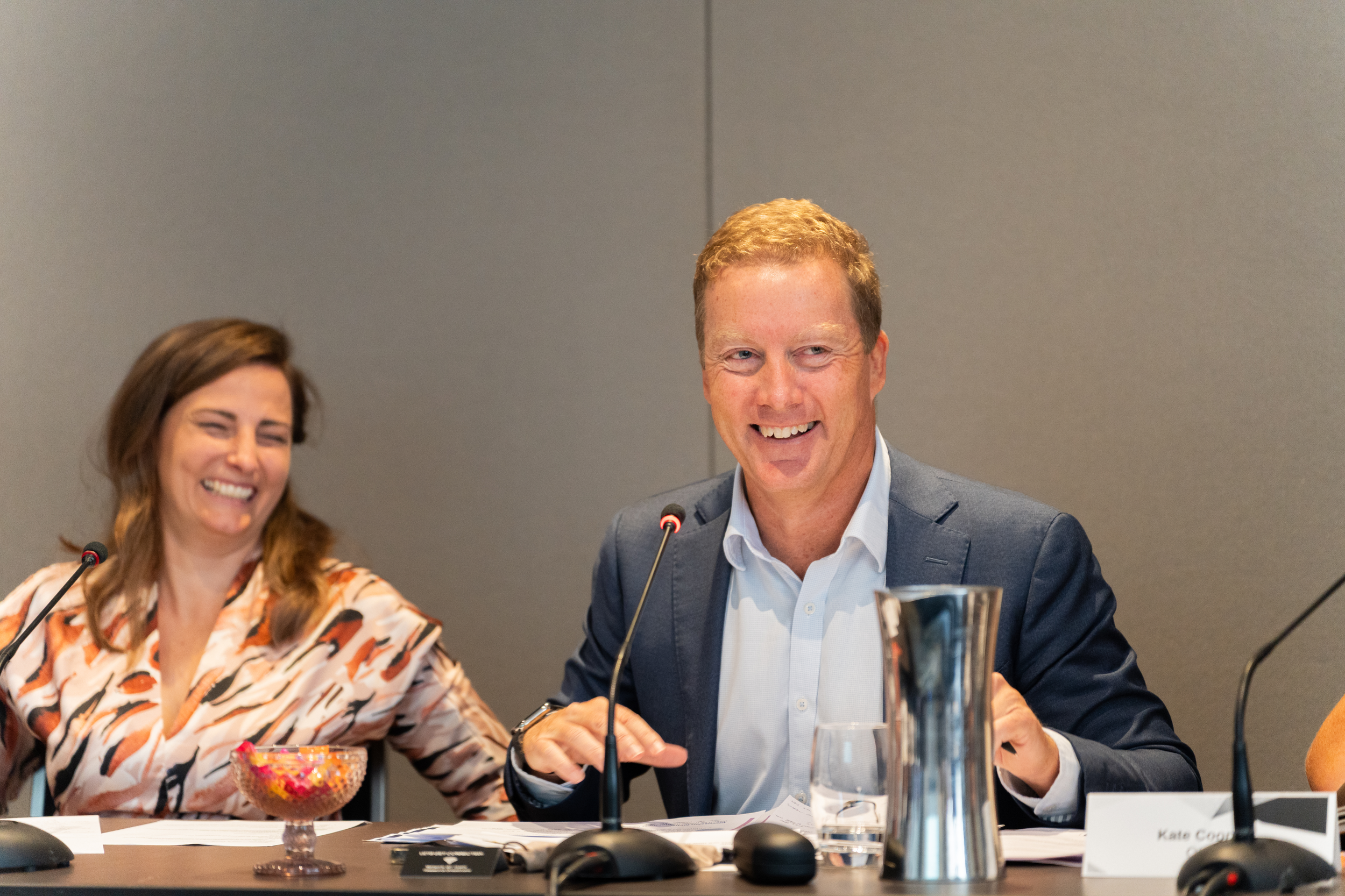
Michael Prendiville (CEO, JellyC) and Joni Pirovich (CEO, Crystal aOS) Hosting the Policy Forum
Following the forum and subsequent industry discussions, a draft policy paper has been developed outlining a practical and compelling pathway for the creation of new national financial infrastructure and reserves: the Australian Strategic Digital Asset Reserve (ASDAR).
This paper sets out how ASDAR could strengthen Australia’s competitiveness, support responsible innovation, and position digital assets as a core component of the nation’s economic architecture. The full paper is expected to be published in May 2026.
ASDAR is designed to consolidate, govern, strategically manage and retain digital assets like Bitcoin that are already under government and government agencies' control. In addition, it provides a new platform for Australia to participate in digital finance areas such as stablecoins (digital money backed by fiat currencies), tokenisation (digital ownership and trading of real-world assets), and agentic finance (autonomous AI agents that can independently execute and manage).
ASDAR can significantly contribute to Australia’s digital finance capability, custody, and governance foundations. As markets transition toward blockchain-based settlement rails and programmable finance, sovereign capability in digital asset custody, settlement, and governance strengthens Australia’s ability to engage internally and across borders and shape these systems in our national interest.
Digital assets – particularly Bitcoin and regulated stablecoins - are increasingly becoming part of the global financial infrastructure. Stablecoins alone now process more than USD 28 trillion in annual transaction volume globally, while tokenisation is estimated to deliver over USD 4 trillion per year in global economic impact, driven primarily by efficiency gains in markets, payments and asset servicing.
Global policy developments, including the United States’ move to establish a Strategic Bitcoin Reserve (SBR) and broader Digital Asset Stockpile, signal a new paradigm in sovereign digital asset management.

Creating and incorporating ASDAR – essentially within our existing bodies and framework - is a forward-looking policy and action to strengthen and safeguard Australia’s sovereignty and resilience in a rapidly evolving global financial landscape.
ASDAR can also support the long-term relevance of the Australian dollar by providing infrastructure and reserves for Australian dollar-denominated digital trading, markets and commerce.
Creating ASDAR is consistent and complementary with current Government policies and initiatives for productivity improvement, building markets and infrastructure development in Australia, the energy transition, and many innovation and growth initiatives at the federal and state levels.
We envisage ASDAR being synergistic, complementary and integrated with existing agencies and governments – Treasury, the RBA, Government agencies - and operating a “bucket” model so state and local governments, and agencies such as the AFP can access, govern and benefit.

Phase 1 is budget-neutral, beginning with consolidating confiscated, seized, and forfeited digital assets already under government and government agencies' control. The immediate deliverables are efficiency benefits in the management of existing assets, the creation of sovereign-grade custody architecture, auditability, and governance discipline. Phase 2 enables selective expansion only once that credibility is demonstrated, subject to explicit statutory authority and fiscal guardrails. The proposed Digital Asset Reserve Board of Australia (DARBA) provides the dedicated institutional capability that fragmented agency management cannot replicate.
ASDAR is not intended to generate speculative returns or operate as an active investment vehicle. Its primary purpose is responsible and strategic digital asset management to the nation’s benefit, a sovereign capability in digital assets and finance, building appropriate risk management structures and providing Australia with enhanced financial markets infrastructure.
Beyond its balance-sheet and digital asset management and risk management roles, ASDAR sends a signal. Establishing the reserves accelerates regulatory clarity, digital finance capability, uplifts sovereign cyber and custody protection, and strengthens law-enforcement coordination. Beyond these specifics, it positions Australia as a credible participant - and rule-shaper - in the emerging digital trade and settlement systems globally, particularly in the Asia Pacific region.
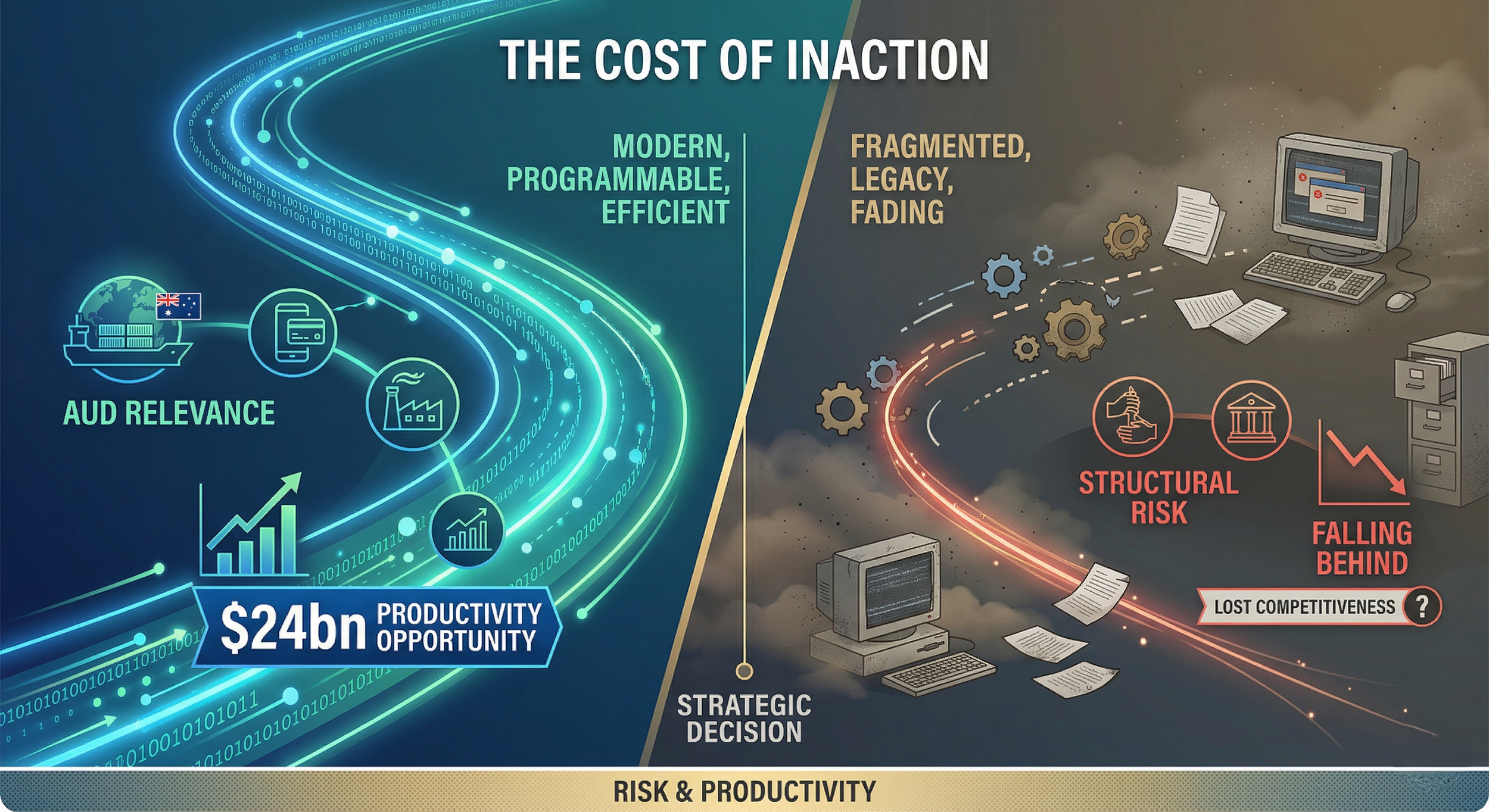
ASDAR can be a catalyst and driver for our Productivity Growth
Independent research released in March 2026 by the Digital Finance Cooperative Research Centre quantifies what is at stake for Australia in the transition to digital finance: $24 billion in annual productivity gains, approximately one percent of GDP, available through better markets, better payments, and better assets. Yet on the current trajectory, Australia will capture less than $1 billion of that by 2030. Australia does not yet have the financial guardrails and platforms, custody standards, governance architecture, or sovereign settlement infrastructure required to participate in the next phase of global digital finance on its own terms.
ASDAR can materially address many of these foundational constraints and infrastructure deficiencies that are inhibiting this productivity growth opportunity and also act as a catalyst and growth driver for delivering this $24 Bn annual productivity opportunity.
The global financial system is undergoing a structural transition as settlement, custody, and value transfer move onto programmable digital rails. The monetary systems denominating those transactions will be determined by infrastructure decisions being made now.
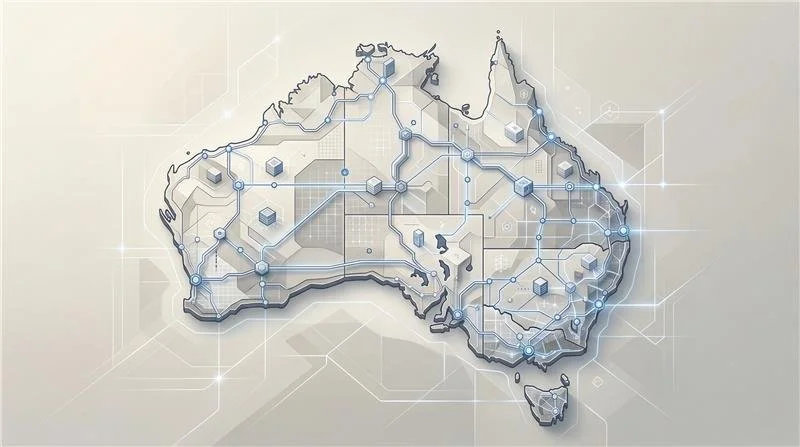
At present, 99 percent of global stablecoin flows are USD-denominated. As programmable money becomes the default settlement instrument for digital and agentic commerce, jurisdictions without credible sovereign digital currency infrastructure do not remain neutral. They inherit the monetary architecture of others by default. For a middle power with one of the world's most sophisticated financial systems, this represents a structural risk to the long-term relevance of the Australian dollar that cannot be addressed after the rails are built.
ASDAR can provide a bulwark for the Australian dollar in the upcoming world of programmable money, digital finance and widespread global stablecoin adoption.
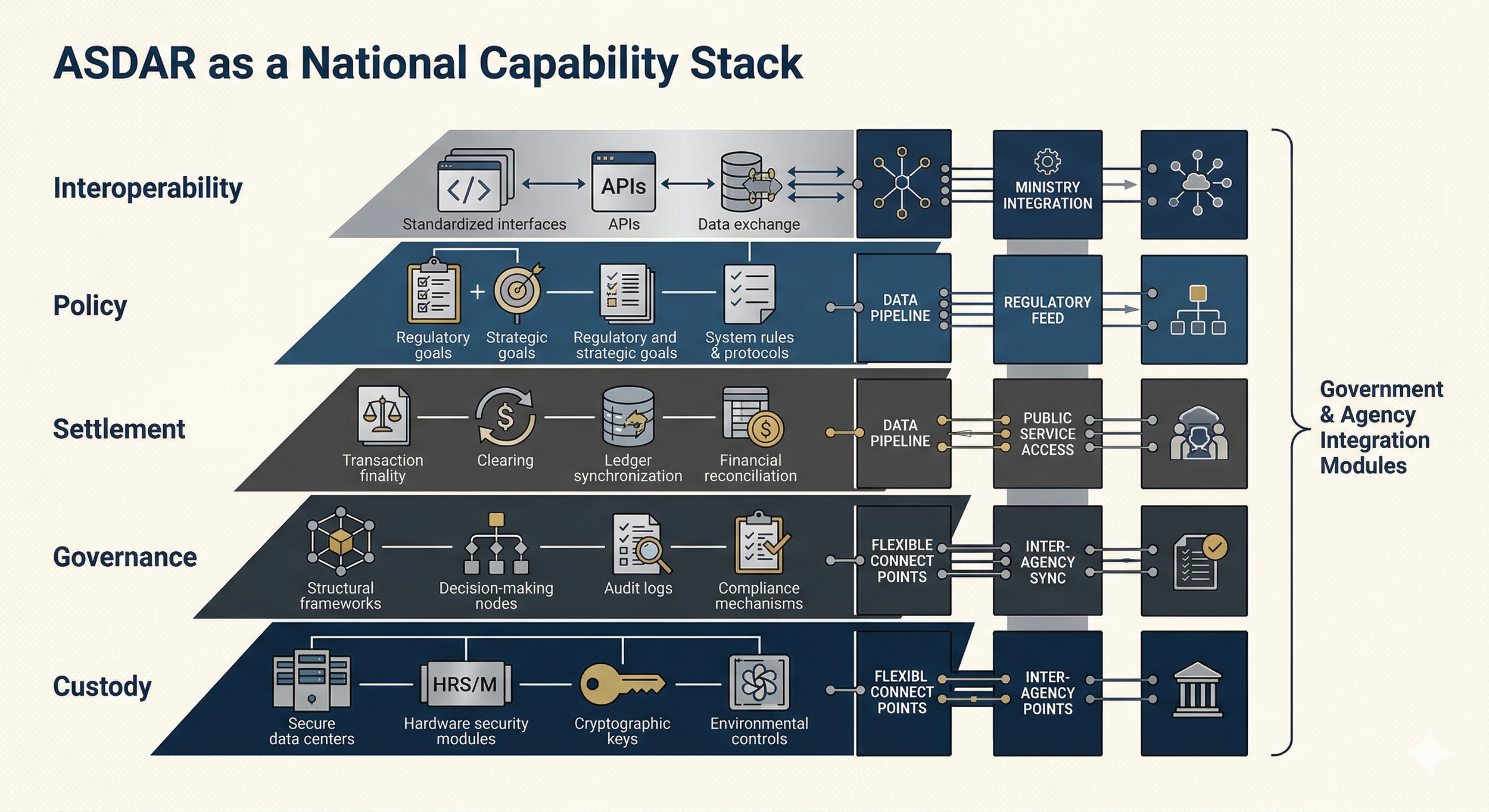
It enables Australia to manage digital assets as a coherent national capability, and builds our capability, resilience and readiness for the future.
Microsoft Copilot AI was used to review this Article. Google’s Nano Banana AI was used to create the images.
Disclaimer
This article ("Article") has been prepared for informational purposes only and does not constitute an offer to sell or a solicitation of an offer to purchase any financial product or service. This Article does not form part of any offer document issued by JellyC Pty Ltd (CAR Number 001293184), a corporate authorised representative of TAF Capital Pty Ltd (ACN 159 557 598, AFSL 425925). Past performance is not necessarily indicative of future results, and no person guarantees the performance of any financial product or service mentioned in this Article, nor the amount or timing of any return from it.
This material has been prepared for wholesale clients, as defined under Sections 761G and 761GA of the Corporations Act 2001 (Cth), and must not be construed as financial advice. Neither this Article nor any offer document issued by JellyC Pty Ltd or TAF Capital Pty Ltd takes into account your investment objectives, financial situation, or specific needs.
The information contained in this Article may not be reproduced, distributed, or disclosed, in whole or in part, without prior written consent from JellyC Pty Ltd. This Article has been prepared by JellyC Pty Ltd, which, along with its related parties, employees, and directors, makes no representation or warranty as to the accuracy or reliability of the information provided and accepts no liability for any reliance placed on it. Prospective investors should obtain and review the relevant offer documents before making any investment decision.